Over the past month or so, the OfDIA team has attended some digital identity industry events abroad. Not everyone gets the opportunity to attend industry events like this, so we’ve written up the presentation we delivered as a blog post.
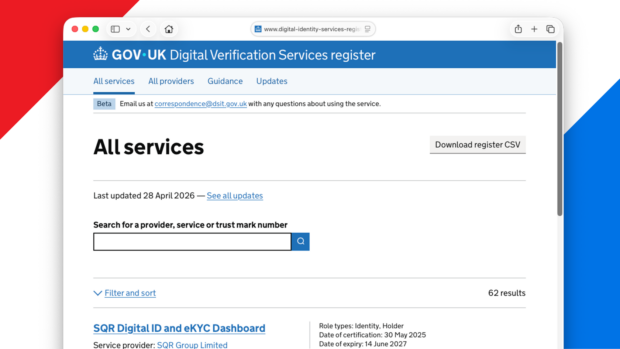
The Office for Digital Identities and Attributes (OfDIA) is introducing machine-readable technology to the digital verification services register. This will allow businesses and public authorities to check the register securely and at scale. The current register The current digital verification services (DVS) register is a GOV.UK list of …
Today we published our second annual sectoral analysis of the UK digital identity market...
Today the Home Office has laid legislation that will allow customers at licensed premises in England and Wales to prove their age using digital checks from a registered digital verification service provider.
In December 2024, we blogged about OfDIA’s work to explore how the wider take up of UK qualified trust services across the economy might complement the evolving UK digital identity ecosystem. In August 2025, we launched a call for views on trust services. We have now published the findings from …
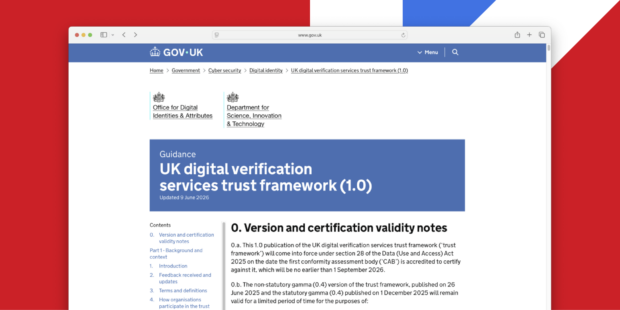
Yesterday, we published the final release of version 1.0 of the UK digital verification services trust framework. The 1.0 version will come into force from 1 September 2026, or from the date at least one conformity assessment body (CAB) is accredited against the 1.0 certification scheme, whichever is later.
Yesterday, we published the final 1.0 version of the UK digital verification services trust framework on GOV.UK. The publication is accompanied by final versions of the 1.0 supporting documents, as well as the 1.0 supplementary codes for digital right to work, …
Through the information gateway, registered digital verification service (DVS) providers can ask for information directly from public authorities.
As adoption of digital verification services (DVS) grows, it’s important that certified DVS providers share clear, consistent and accurate information about what their certification means. Some terminology can cause confusion - for example, where providers describe their service as being …
Digital identity only works if people trust it. And that trust needs to hold in a world where people increasingly live, work and do business across countries. That’s why international standards matter for the UK’s digital verification services (DVS) trust framework. They help ensure digital identity services are …